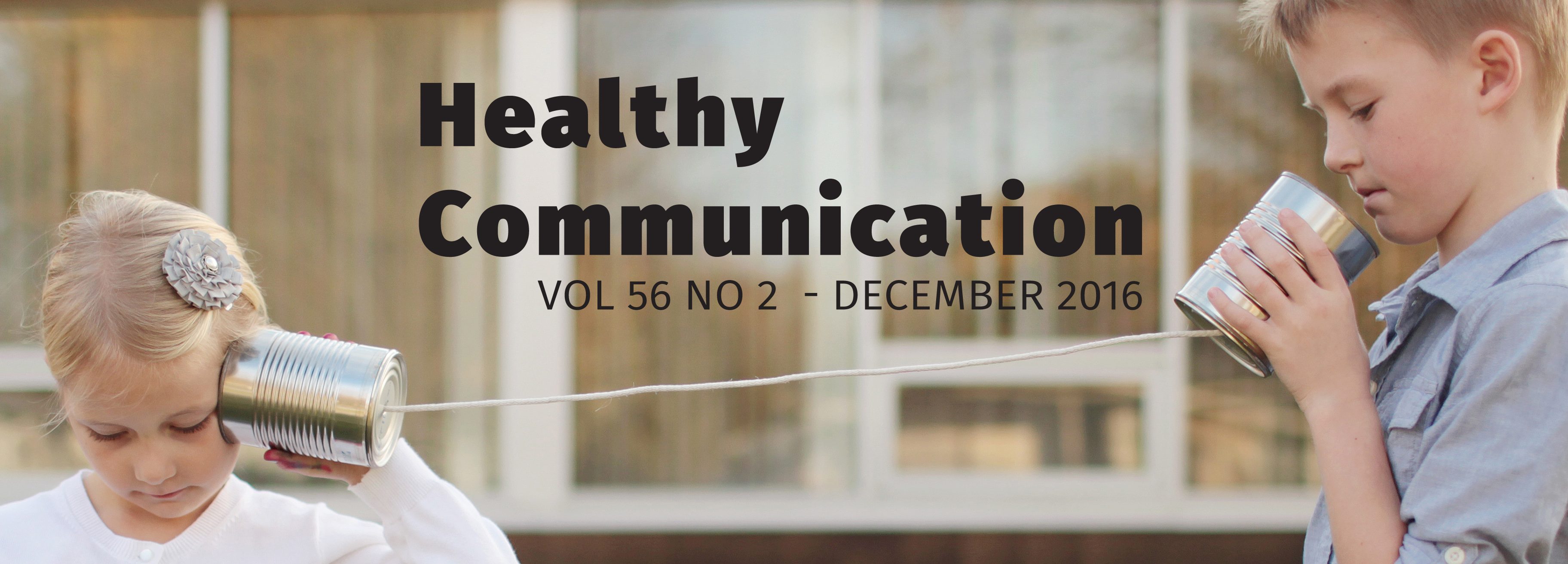
Care-Full Words: Leveraging the Power to Deepen or Divide

Words.

Words have power.

Words echo in our ears and sink into our hearts. It doesn’t matter how hard the outer shell is—words penetrate deeply and have the ability to lift us up or tear us down.

Saying certain things out loud has never been easy. Now, with electronic communications—from email to Twitter—words can be thrown around with complete disregard for the recipient. Why? No eye contact. No face-to-face. No shared physical space. The reality and magnitude of the comment is without context. Often the comment is detached from a “real” person and, thus, lacks any relational implications.

Communicating with written word is not a new thing. Letters and notes have been written for centuries. So, what’s different? Immediacy. The ability to communicate so quickly frees the communicator from reflection and processing . . . if they choose. Far too often people push send or post and think, “Oops. . . . I shouldn’t have said that.” It felt right at the moment, and then we reflect on the magnitude of the words we wrote or the relationship that may be stake as a result.

Let’s think about this all in the context of school communities. Schools are a hub for communication. I would argue that the overall success of a school depends on how well the school communicates with its stakeholders. Key communication happens every day among administrators, teachers, students, and parents. Without question, the majority of communication happens electronically—in written words. The non-verbals are out the door, and we rest on our ability to read an email, tweet, or Facebook message.

Do we have time for all the electronic communications? Simply put: no. We need to make time. Making time to effectively communicate demonstrates that the receiver or sender is a priority and that their relationship with us is important. It has the ability to deepen a relationship. Conversely, quick and thoughtless communication or lack of communication demonstrates the opposite and shouts loudly and clearly, “You don’t matter that much to me. . . . You’re not a priority!” Although this may be far from the truth, it is a perception, and that perception becomes a reality for many people.

We can make every excuse in the book to justify poor electronic communication. For example, if a student sends us an email with no greeting, poor grammar, and horrible spelling, we naturally want to send a quick reply. However, I would suggest that we take a moment to write an email reply that includes the student’s name, proper spelling and grammar, and ends with our name. Be professional and respond in a way that we’d like the students to communicate. Will this magically correct the student’s electronic communication? Maybe. What it will do is remind us of the importance of words and that a big part of our job is to communicate well. That professional tone should pour into communication with parents, teachers, and administrators. Taking the time to give a reflective answer in a timely fashion shows that we care.

When receiving a communication, it is good to ask, “What is the sender’s story? What has the sender’s day looked like?” On the flip-side, it is good to ask, “What’s my story? What am I trying to communicate? Am I in good space to be sending this? Who should I have edit this and be my filter?” The context within which a communication is sent may be different than the context in which it is received.

So, what do we do after we have received an electronic communication that rubs us the wrong way?

  1. Put on your “grifter”—a grace-filled filter. Personally, I’d rather have someone send me an email that they regret than not sending an email at all and letting it fester. Obviously, we need to communicate about something and get on the same page. Don’t be offended. Be approachable.
  2. Breathe and step away.
  3. Ask clarifying questions.
  4. Avoid a sarcastic tone (or writing anything that could be seen in that light).
  5. Have a trusted friend edit/filter your response.
  6. Give the sender the benefit of the doubt.
  7. Send a quick message back informing the sender that you have received the communication and will reply when you have enough time to dedicate to the important matter.
  8. Jesus test. If you can’t send an email without signing, “In Jesus, [your name],” then you shouldn’t send the email.
  9. Give them a call.
  10. Set up a time to meet. Face-to-face meetings break down a lot of barriers and allow for clear communication, and there is a great likelihood that both parties will walk away on the same page or at least working toward reconciliation if that is required.

Put on your “grifter.” Value relationships. Make all electronic communications a priority. Know the fellow communicator and adjust accordingly. Although email has the reputation for being impersonal, it can be a regular opportunity to deepen existing relationships We also have the choice to divide relationships because our lack of effective communication may give the impression that we don’t care.

May our receiving and giving of all communication be filled with grace, discernment, and pure motives. May all the words we use be communicated in the power and name of Jesus. 

Chuck Commeret serves as technology teacher and theatre/auditorium manager at Holland Christian High School in Holland, MI.